
Nicolás Bruno
Coordinador de Academia
Soy Psicólogo de la UBA y también hice un Máster en Ciencias Cognitivas en ENS-Paris. Ahora, estoy terminando un doctorado en neurociencias entre UNC (Arg) y la Sorbonne (Francia) tratando de ver si se puede predecir cuando nos distraemos usando señales fisiológicas. También trabajo un poco de programador y data scientist.
Investigaciones
10 publicaciónes científicas

Does Clinical Evidence Reach Psychological Treatments? Psychotherapy Status in Argentina

Acute effects of psilocybin on the dynamics of gaze fixations during visual aesthetic perception

Time-resolved neural and experience dynamics of medium- and high-dose DMT

Dynamics of EEG microstates change across the spectrum of disorders of consciousness

Affective computing as a tool for understanding emotion dynamics from physiology: A predictive modeling study of arousal and valence
Distinct Electrophysiological Signatures of Intentional and Unintentional Mind-Wandering Revealed by Low-Frequency EEG Markers
Psilocybin-induced modulation of visual salience processing
Methodological considerations for the study of non conscious processes through the masked priming paradigm

FORMACIÓN DE CLASES DE EQUIVALENCIA DE ESTÍMULO Y EFECTO DE BLOQUEO
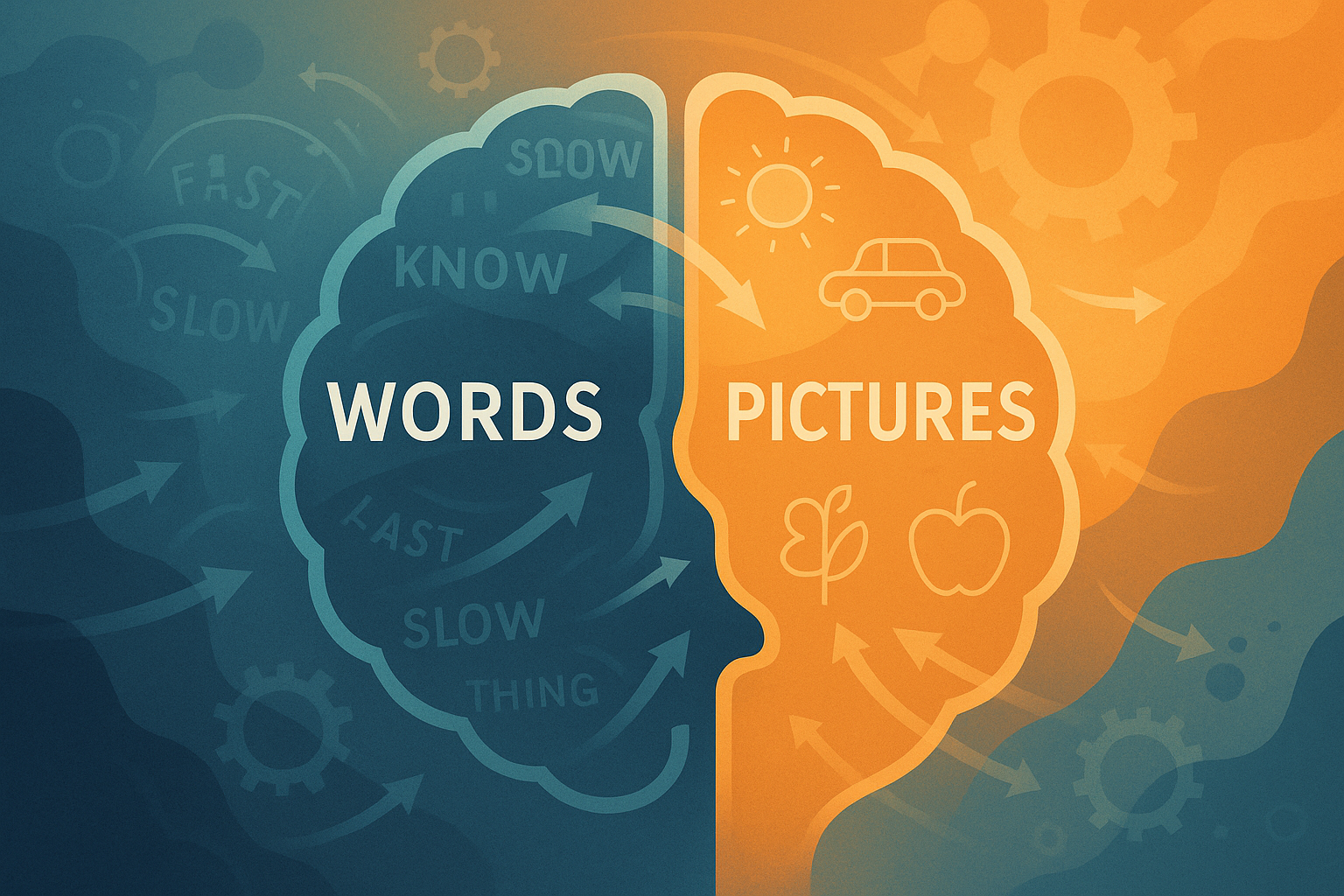
Faster might not be better: Pictures may not elicit a stronger unconscious priming effect than words when modulated by semantic similarity
It has been suggested that unconscious semantic processing is stimulus-dependent, and that pictures might have privileged access to semantic content. Those findings led to the hypothesis that unconscious semantic priming effect for pictorial stimuli would be stronger as compared to verbal stimuli. This effect was tested on pictures and words by manipulating the semantic similarity between the prime and target stimuli. Participants performed a masked priming categorization task for either words or pictures with three semantic similarity conditions: strongly similar, weakly similar, and non-similar. Significant differences in reaction times were only found between strongly similar and non-similar and between weakly similar and non-similar, for both pictures and words, with faster overall responses for pictures as compared to words. Nevertheless, pictures showed no superior priming effect over words. This could suggest the hypothesis that even though semantic processing is faster for pictures, this does not imply a stronger unconscious priming effect.