
Iair Embon
Comisión Directiva
Iair es Licenciado en Psicología por la UBA y doctorando en Neurociencias en la UNC con beca CONICET. Su investigación en el Instituto de Cálculo se enfoca en metacognición perceptual en autismo mediante experimentación y modelado computacional. Como co-fundador de NeuroTransmitiendo, aporta su visión científica y experiencia investigativa a la misión de la organización desde la comisión directiva.
Investigaciones
6 publicaciónes científicas

Exploring the relationship between dysfunctional personality traits with metacognition and confidence

Is visual metacognition associated with autistic traits? A regression analysis shows no link between visual metacognition and Autism-Spectrum Quotient scores
Methodological considerations for the study of non conscious processes through the masked priming paradigm

FORMACIÓN DE CLASES DE EQUIVALENCIA DE ESTÍMULO Y EFECTO DE BLOQUEO
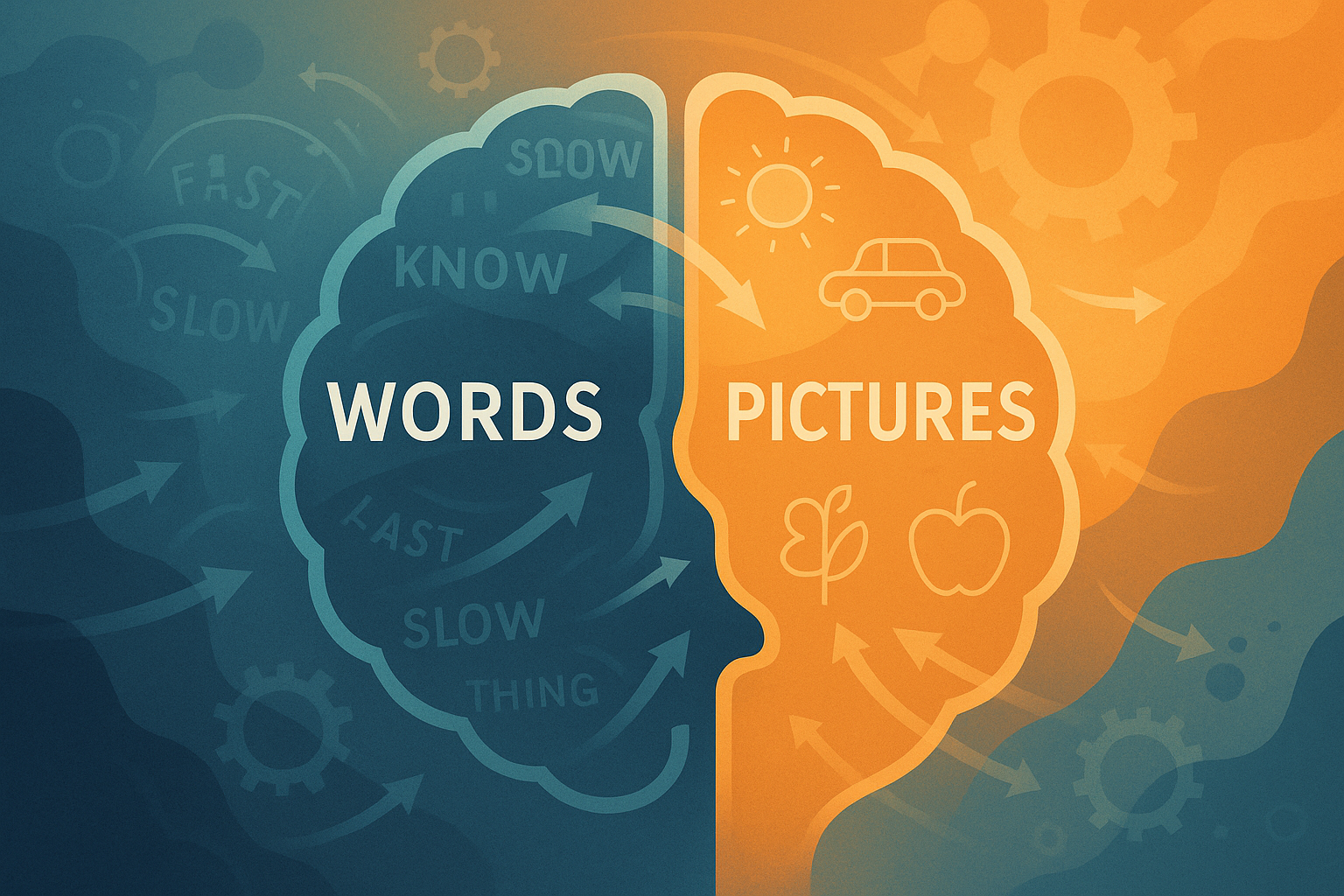
Faster might not be better: Pictures may not elicit a stronger unconscious priming effect than words when modulated by semantic similarity
It has been suggested that unconscious semantic processing is stimulus-dependent, and that pictures might have privileged access to semantic content. Those findings led to the hypothesis that unconscious semantic priming effect for pictorial stimuli would be stronger as compared to verbal stimuli. This effect was tested on pictures and words by manipulating the semantic similarity between the prime and target stimuli. Participants performed a masked priming categorization task for either words or pictures with three semantic similarity conditions: strongly similar, weakly similar, and non-similar. Significant differences in reaction times were only found between strongly similar and non-similar and between weakly similar and non-similar, for both pictures and words, with faster overall responses for pictures as compared to words. Nevertheless, pictures showed no superior priming effect over words. This could suggest the hypothesis that even though semantic processing is faster for pictures, this does not imply a stronger unconscious priming effect.